This article is written from a practical TikTok growth and monetization perspective. It reflects commonly observed campaign structures, performance trade-offs, and scaling challenges faced by e-commerce sellers using TikTok as a primary sales channel.
 +
+
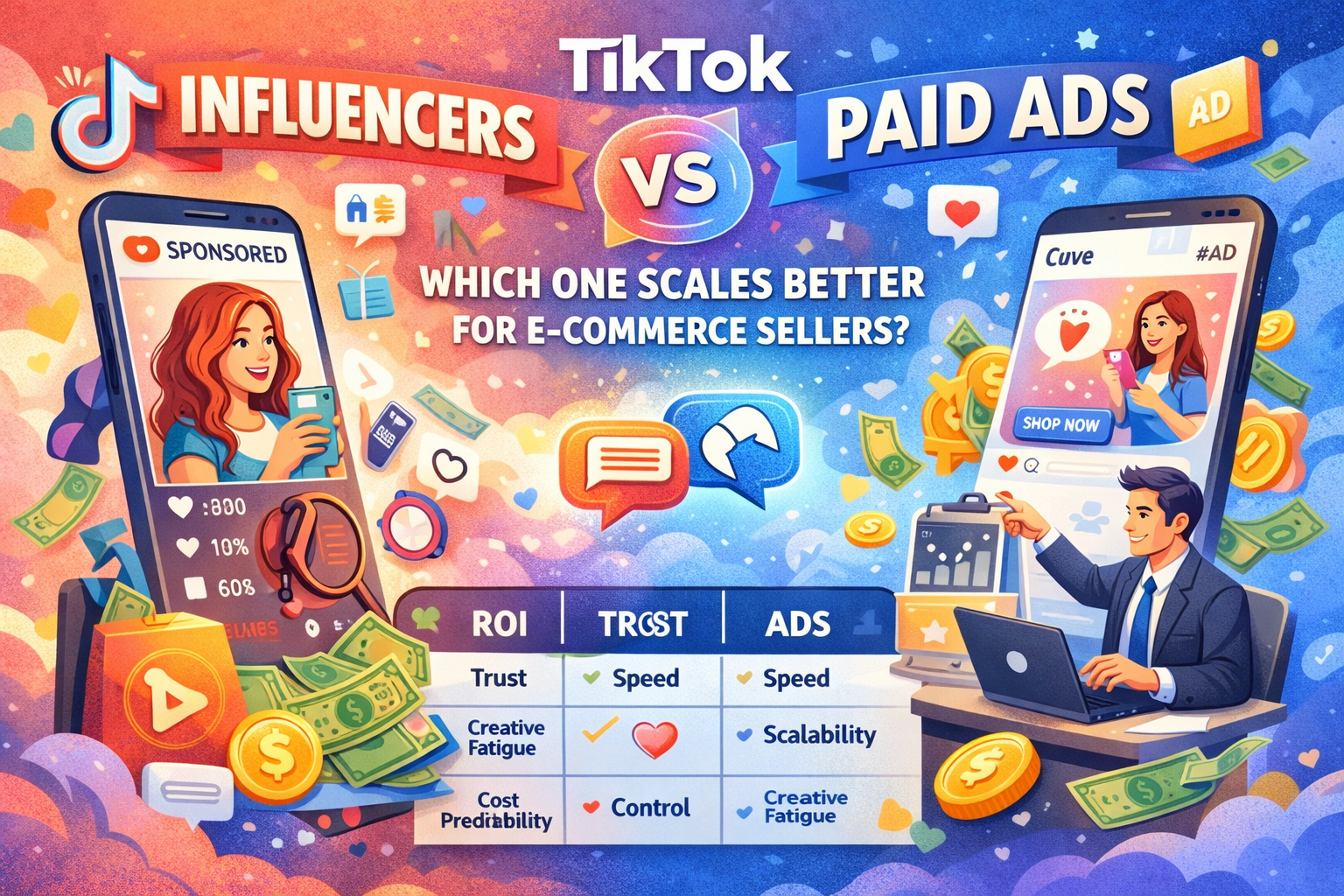
1.Why This Comparison Matters for E-commerce Sellers
TikTok offers two dominant growth paths:
- Paid traffic through TikTok Ads
- Organic reach through creator collaborations
Both can generate sales, but they scale very differently.
Sellers who choose the wrong path too early often burn budget, misread performance, or fail to build sustainable momentum.
2.How TikTok Influencer Marketing Actually Works
Influencer marketing on TikTok relies on trust rather than targeting.
Creators:
- Speak in native platform language
- Already understand audience preferences
- Lower resistance to product messaging
For e-commerce sellers, this often results in higher conversion rates, especially for impulse-buy or visually demonstrable products.
3.The Strengths and Limits of TikTok Paid Ads
Paid ads offer:
- Immediate traffic
- Clear budget control
- Scalable impressions
However, ads suffer from creative fatigue quickly. What converts today may stop working in weeks.
Ads also require:
- Continuous creative production
- Testing budgets
- Technical optimization
For newer sellers, this learning curve can be expensive.
4.Cost Structure: Influencers vs Ads
Influencer costs are usually fixed per video or campaign. Ad costs fluctuate based on competition and performance.
This means:
- Influencers are easier to budget
- Ads are easier to scale if they work
Understanding true ROI requires consistent tracking.
5.Where Most Sellers Make the Wrong Choice
Common mistakes include:
- Scaling ads before validating messaging
- Paying influencers without performance benchmarks
- Treating creators as media buyers rather than partners
Both approaches fail without data discipline.
6.Using KOLSprite to Evaluate Influencer Performance
KOLSprite allows sellers to:
- Analyze creator engagement quality
- Compare performance across niches
- Identify creators whose audiences match product intent
This reduces risk and improves collaboration efficiency.
7.A Hybrid Model: The Most Sustainable Path
The strongest TikTok sellers rarely choose one approach exclusively.
Instead, they:
- Test messaging via influencers
- Identify winning creatives
- Amplify proven content with ads
This hybrid model minimizes waste and maximizes learning.
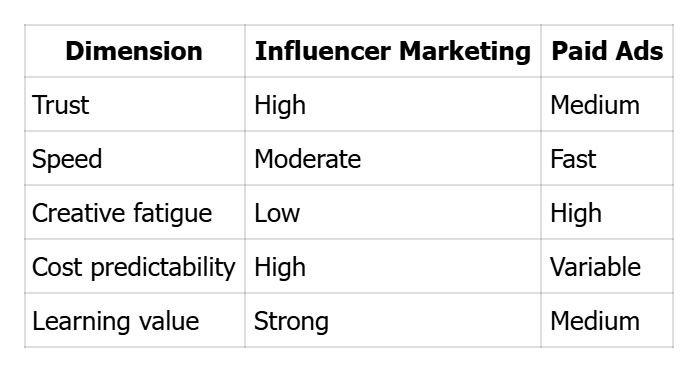
8.Influencer Marketing vs Paid Ads (Comparison Table)
 +
+
9.When Influencers Outperform Ads
Influencers excel when:
- Products need demonstration
- Social proof matters
- Budgets are limited
They also provide reusable content assets.
10.When Ads Make More Sense
Ads perform better when:
- Product-market fit is proven
- Creatives are validated
- Margins support testing
Without these, ads become a cost center.
11.Building a Decision Framework
Ask three questions:
- Is my messaging validated?
- Do I have creative volume?
- Can I tolerate testing losses?
Your answers determine the correct mix.
CTA
Choose the right TikTok growth path — use KOLSprite to analyze creators, validate content, and scale with confidence.



 Refer & Earn